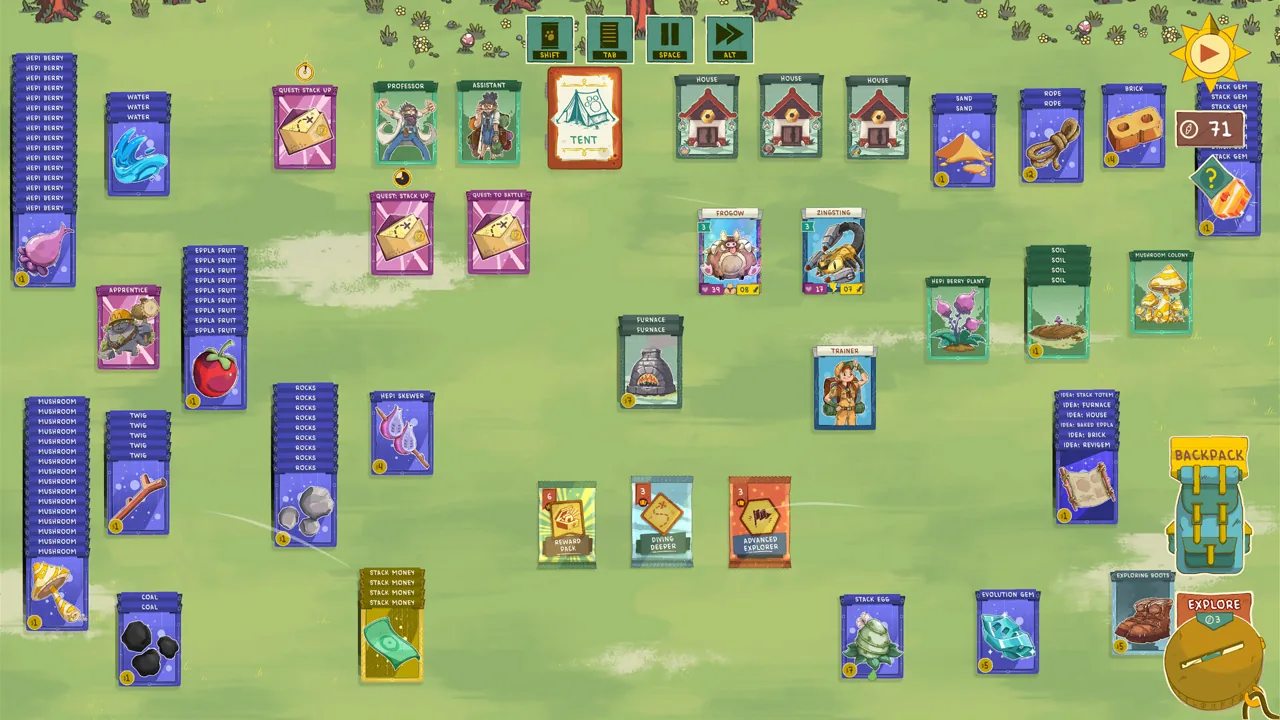
1. Treat every card as a possible relationship
The official description says Stackmon, resources and items can be dragged onto one another to form combinations. When learning the game, read the card types and visible outcomes before assuming two similar-looking stacks behave the same way.
- Use Stackmon to gather materials.
- Turn gathered materials into crafted items.
- Use repeated jobs to begin automating the camp.
2. Grow Harmony for options, not decoration
Harmony is the home base. Building and upgrading it is tied to recipes, upgrades and abilities, so camp development is part of progression rather than a separate cosmetic layer.
- Check what a building says it unlocks in your current build.
- Keep Demo-era advice version-labeled.
- Do not assume the Demo and launch recipe sets are identical.
3. Prepare before leaving the base
Exploration is where the collection expands and rival Scouts appear. The confirmed combat layer uses equipment, abilities and elemental affinities in strategic auto-battles, so preparation happens before the fight resolves.
- Bring a clear collection or resource goal.
- Review equipment and abilities before a Scout challenge.
- Read the current biome rule before committing to a route.
4. Use the current speed control
Patch 9.0.74 changed the keyboard fast-forward key to CTRL. If an older guide names another binding, update first and use the current control rather than remapping around stale advice.
5. Use the new readability options if needed
Patch 9.0.76 adds an alternate font and an option to improve nighttime visibility. Try those settings before struggling through small text or dark routes.
6. Read missions before selling basic cards
Launch-week players repeatedly point to Professor missions as a way to recover Adventure Points. Check the requested cards first, reserve the cheapest completion path, and sell only the surplus that remains. This prevents an easy mission from becoming a new Wood or food shortage.
7. Give pack cycling a stop rule
Cheap packs can restart a stalled board, but opening pack after pack for one exact card can add clutter without solving the mission. Decide how many attempts the current budget can support, keep useful results, then switch to production or exploration if the missing card does not appear.
8. Make every expedition solve more than one problem
A route costs Adventure Points, so plan a primary goal and a fallback. A Rope run can also target Trainers, Wood, a mission step or a missing Stackpedia entry. Leave backpack space for the main item and return before one failed drop threatens the whole trip.
9. Use current recipes, not confident-looking old lists
Retail patches have changed recipe behavior, and the old Demo removed recipes before launch. Prefer combinations shown by the current game or confirmed in current developer notes. If a copied stack fails, separate the cards and check the recipe source before spending more materials.