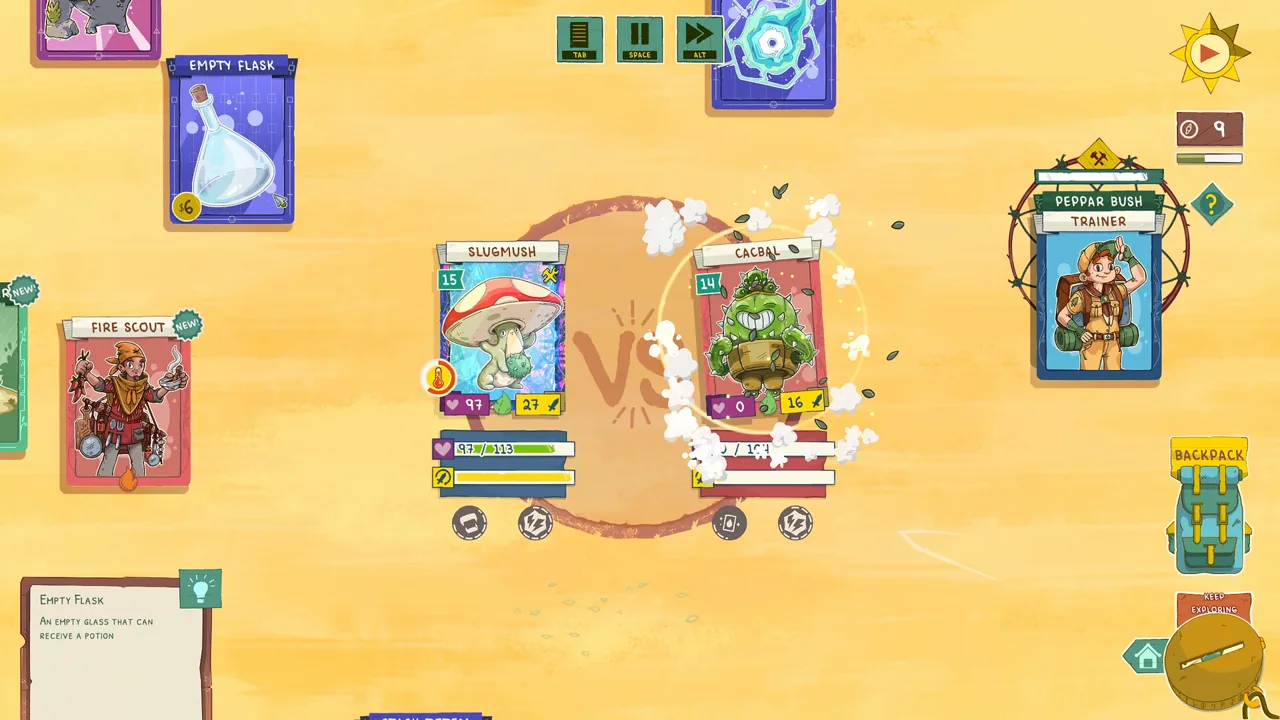
Define the job before choosing the team
A collection run, Scout challenge and Soot objective may reward different preparation. Start with the opponent, route or objective. “Best team” without a target mixes several questions and hides what the lineup is meant to solve.
Audit every visible input
For each selected Stackmon, note the current type, ability text, level or progression state, equipped item and any visible status. Official store copy confirms that equipment, abilities and affinities matter; the current card is the best source for the values that apply to your run.
Use category coverage as a check, not a matchup chart
Steam names Fire, Aether, Water, Plant, Rock, Thunder and Neutral collection categories. Spreading a team across categories can reduce dependence on one label. Watch the game’s affinity feedback instead of assuming a familiar type chart applies.
Separate survival, damage and utility observations
When a team loses, identify whether it failed to survive, failed to finish the opponent or failed because an ability or status did not trigger as expected. Changing several members at once hides which adjustment helped.
Retest with one controlled change
Swap one equipment card, replace one Stackmon, or adjust one ability choice, then repeat the same encounter if the game allows it. Keep the opponent and game version constant so you can tell which change actually helped.
Keep promotional numbers out of permanent builds
Official screenshots prove that combat and named creatures exist, but their displayed card numbers may reflect a particular progression state or pre-release capture. Use live cards for current values and date any shared lineup.